Virtual Icebreaker Games That Actually Work for Remote Teams
Eight fully scripted icebreaker games — with time estimates, materials, facilitation notes, and the psychology behind why each one works — that go far beyond the dreaded "share a fun fact about yourself."
2026-03-22 · 10 min read · BuzzerBug™ Team
The Problem with "Fun Facts"
The standard meeting icebreaker is a social trap. Asking people to share a fun fact about themselves creates a specific anxiety: the fact needs to be interesting enough to seem worth sharing, personal enough to feel authentic, and safe enough not to be too revealing. Most people have one fact they've been recycling for years ("I once ate dinner with a prime minister"), and everyone knows it's a recycled fact.
The deeper problem is that passive sharing creates no shared experience. When you watch eight colleagues describe themselves in turn, you have not done anything together. A game, by contrast — even a short, simple one — creates a shared event. You all experienced the same question, had the same thirty-second window, responded to the same reveal. That shared experience is the raw material of genuine connection.
What follows are eight games that create genuine moments, with the full setup and the psychological reason each one works.
Game 1: Digital Scavenger Hunt
Time required: 10–15 minutes Materials: A buzzer system (BuzzerBug works perfectly), any video call platform
How to run it: The host announces a category and participants race to physically retrieve an item matching the description and hold it to their webcam. First person to buzz in and successfully show a valid item wins the point. Run eight to ten rounds.
Category examples:
- Something older than you
- Something from another country
- Something you made yourself
- Something that has never been opened
- Something embarrassing
- Something worth more than £100 that fits in one hand
- Something that tells a story
Why it works: Physical movement breaks the static sitting-at-desk pattern that makes video calls mentally exhausting. Participants briefly see inside each other's real home environments — a low-stakes, human glimpse that passive introductions never provide. The "something embarrassing" category reliably produces the funniest moments.
Game 2: Guess the Desk
Time required: 15–20 minutes Materials: Participant photo submissions (collected in advance via email or Slack), screen sharing
How to run it: One week before the meeting, ask each participant to photograph their workspace from above (showing the desk surface, not themselves) and submit it to the organiser. During the meeting, display each photo full-screen using screen share. Teams or individuals buzz in to guess whose desk it is. The photo owner confirms or denies.
Facilitator tip: Ask each person to add one deliberately obscure clue item to their desk before photographing — a book, a peculiar object, something that means something to them. Reveal what the item is and its significance after the guess is made. This turns a visual game into a conversation starter.
Why it works: Workspaces are deeply personal and unexpectedly revealing. The combination of the game mechanic (competitive guessing) and the disclosure (what that random object means to someone) creates a natural, unpressured story. People share things through their objects that they would never share in response to "tell us something about yourself."
Game 3: Two Truths and One Lie Buzzer Edition
Time required: 15–20 minutes Materials: Buzzer system
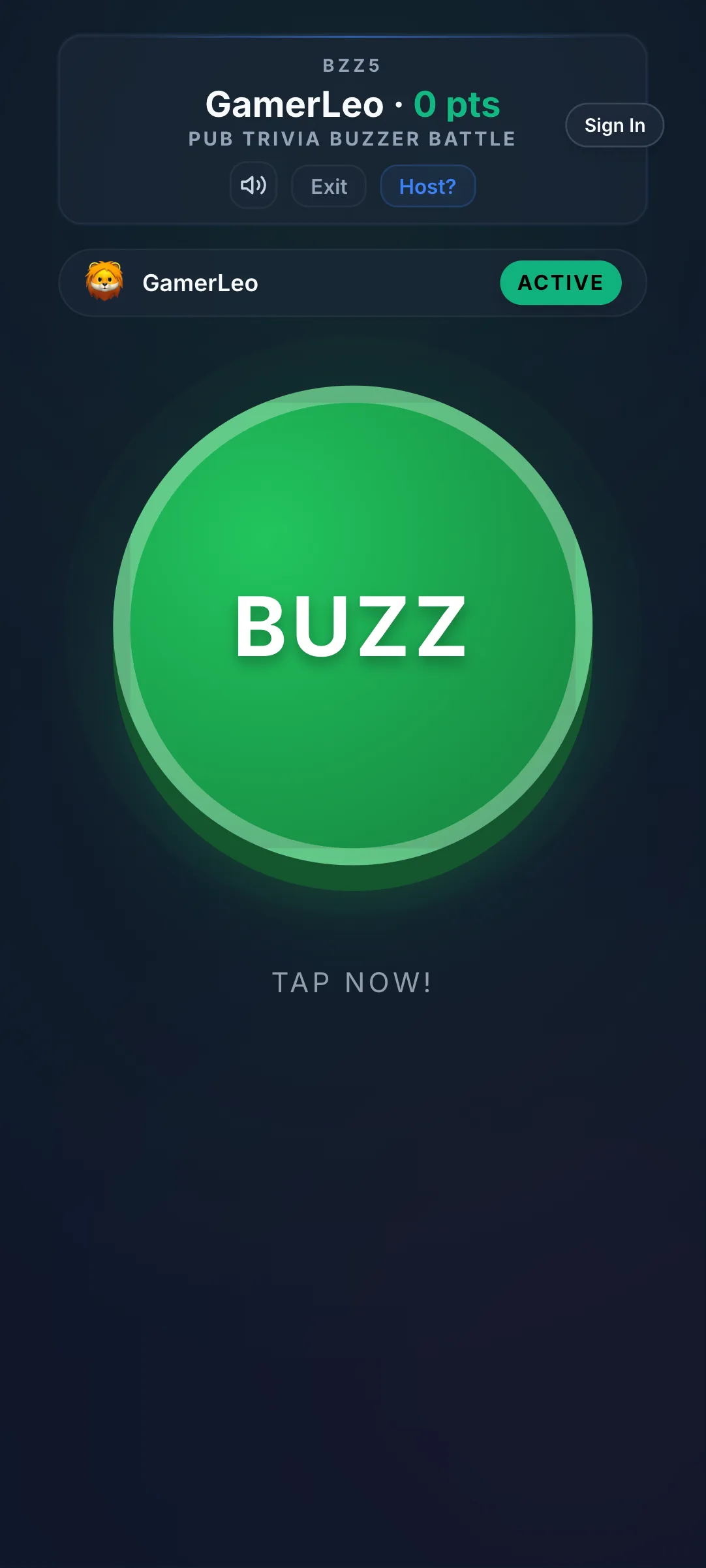
How to run it: One participant (the "performer") reads three statements about themselves: two true, one false. All other participants have thirty seconds to confer via chat, then buzz in to declare their guess. Wrong guesses deduct a point; correct guesses score. The mechanic change from the standard version is critical: because there is a cost to being wrong, participants think more carefully rather than guessing immediately. The performer can only confirm or deny after all guesses are locked.
Advanced variant: Each false statement must be almost true — something that could plausibly have happened. Wildly implausible lies ("I once wrestled a bear") are banned.
Why it works: The cost of a wrong guess changes the psychology completely. In the standard version, people guess casually because there is no consequence. With a penalty, participants actually consider the statements carefully, which means they are paying closer attention to their colleague — and that attention is the foundation of connection.
Game 4: Rapid Fire Word Association
Time required: 10 minutes Materials: Buzzer system, prepared word list
How to run it: The host reads a word. Participants buzz in and say the first associated word that comes to mind. No repetitions — if your word has already been said this round, you must say something new. Run for ten to fifteen words. Score optional; the game works as well unscored.
Word starter examples: Home. Monday. Success. The company name. 2020. The boss's name (use with judgment). Coffee. Deadline. Meeting. Win.
Why it works: Word association is psychologically disarming because there is no "correct" answer and therefore no performance pressure. The unexpected associations people make — the colleague who says "prison" when you say "Monday," the one who says "warmth" — reveal personality with more accuracy than any deliberate self-description. It also consistently produces genuine laughter.
Game 5: Company History Sprint
Time required: 15 minutes Materials: Buzzer system, prepared questions about your company
How to run it: Write fifteen questions specifically about your company, team, or shared history. Mix founding story with recent events, internal culture with public milestones. Questions work on two levels — they test knowledge, but the answers themselves carry information about the company that participants may not know.
Sample question types:
- "What year was the company founded, and what was the original product name?"
- "How many countries does the team currently span?"
- "What was the name of the project that launched in [year] and was cancelled in [year]?"
- "Who was the first employee hired after the founding team?"
Why it works: New hires gain context they'd never think to ask for. Veterans gain appreciation for what they know and nostalgia for the early days. The information itself is relationship-building — knowing the company's story creates shared identity.
Game 6: Name That Sound
Time required: 10–15 minutes Materials: Buzzer system, audio clips (30 seconds of preparation per clip)
How to run it: Play a short audio clip (three to five seconds) and participants buzz in to identify it. Categories: notification sounds from apps, famous TV theme songs, sound effects from video games, audio logos from brands. For a more personal variant: participants submit a ten-second audio clip from their own life in advance (a sound from their neighbourhood, a household sound, their pet), and the group guesses whose sound it is.
Technical note: Play audio through your computer speakers while screen-sharing. Ensure your system audio is included in the screen share settings (this is off by default in some platforms).
Why it works: Auditory recognition bypasses the usual verbal channels of meeting communication and triggers strong emotional and memory responses. The personal variant (identifying whose sound is whose) creates intimacy because participants are sharing sensory details of their home lives that feel genuinely private.
Game 7: Emoji Storytelling
Time required: 15 minutes Materials: Chat function of any video call platform, buzzer system
How to run it: Participants have sixty seconds to type their weekend (or yesterday, or their current mood) using only emojis — no words allowed. Everyone submits simultaneously when time is called. The host reads each submission aloud (or screen-shares the chat). Participants buzz in to guess whose story belongs to whom.
Variant: The host sets a topic — "describe your commute," "describe your relationship with Mondays," "describe a recent win at work" — and participants respond in emoji. Guessing who wrote what is optional; often the discussion that erupts when people explain their emoji choices is more valuable than the game itself.
Why it works: Emoji selection forces a creative constraint that reveals personality. The colleague who uses ten emojis for a simple commute story is different from the one who uses two. The colleague who represents "working from home" as a house + laptop + crying face is sharing something about their experience that they might not say out loud.
Game 8: 60-Second Expert
Time required: 20–25 minutes Materials: Buzzer system, timer
How to run it: Participants volunteer to be a "60-Second Expert" on any topic they genuinely know about. They have sixty seconds to teach the group something about their chosen subject. After the sixty seconds, the host runs a three-question buzzer round based on what was just taught. The presenter hosts the buzzer round and confirms correct answers.
Topics work best when they are specific: Not "cooking" but "why restaurants salt pasta water and why the amount actually matters." Not "photography" but "the one camera setting that professional photographers always adjust first." The constraint of sixty seconds forces the expert to identify what is genuinely interesting and transmissible.
Why it works: People teach what they love, and watching someone talk about something they love is intrinsically engaging. This format consistently produces the longest conversations after the meeting ends because participants discover unexpected expertise in colleagues they thought they knew. The buzzer round at the end cements retention and gives the presenter a visible moment of authority.
Ready to Play?
Create a free game room in seconds. No download, no account needed for players.
Start a Free Quiz Game